




























When Shift Planning Becomes a Daily Coordination Exercise
The more employees, teams, production areas, and shifts need to be coordinated, the more difficult planning becomes with Excel and manual processes.
Typical challenges:
- Multiple Excel files and different planning versions
- High manual maintenance effort
- Short-term absences
- Lack of transparency regarding qualifications
- Time-consuming replacement planning
- Shift planning and production planning are not synchronised
Central Functions of Shift Planning
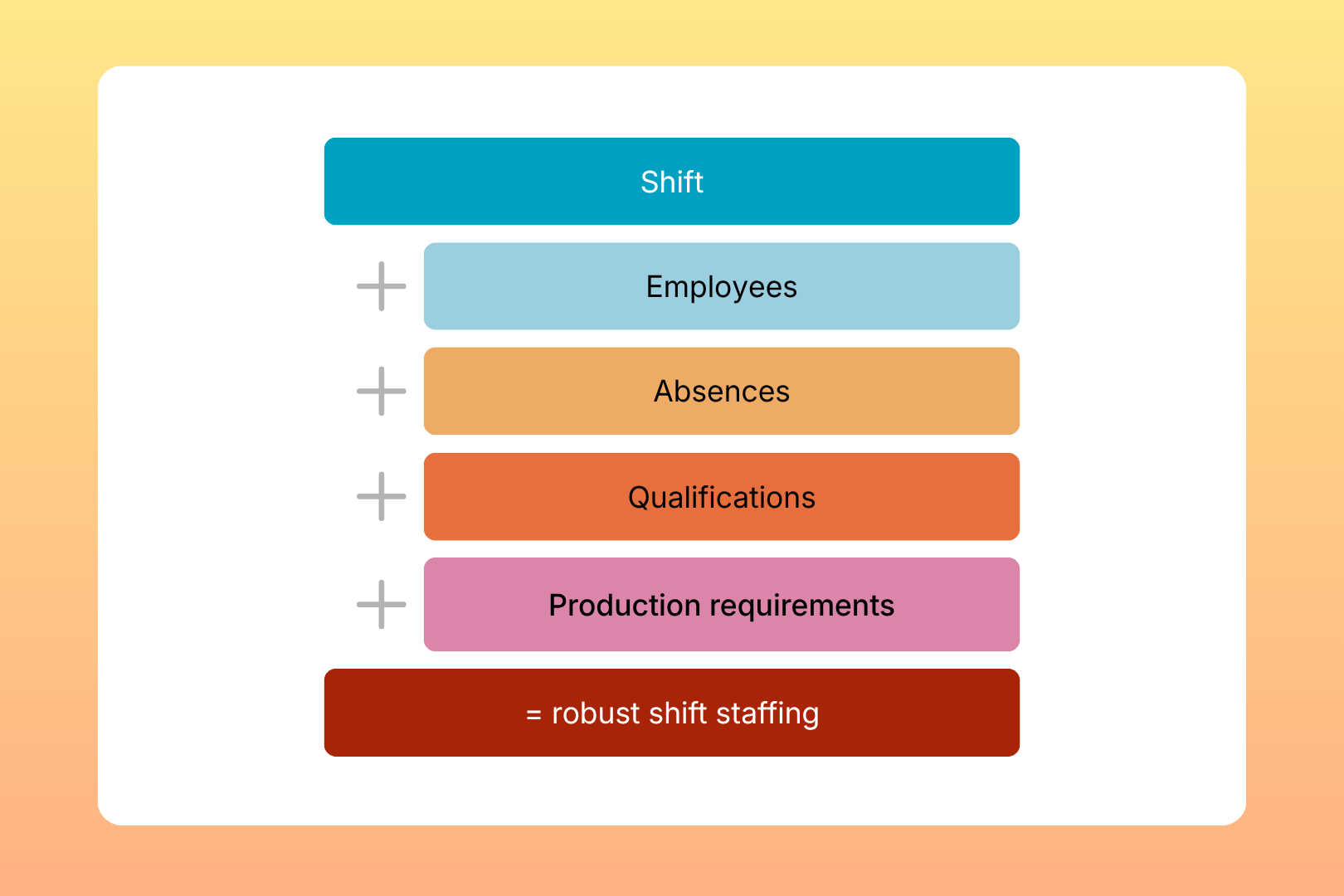
Shift Planning as Part of Production Planning
MCP does not view shift planning in isolation.
The benefits for your production
- Less reliance on Excel and reduced manual maintenance effort
- Greater transparency
- More stable shift staffing
- Faster response to absences and disruptions
- Better utilisation of available employees
- Stronger alignment between workforce management and production planning

Standalone or Integrated
MCP Workforce Management can be used as a standalone workforce scheduling solution or to complement existing planning systems.
Possible integrations include: ERP, APS, MES, and HR systems.
Interaction with other MCP Workforce Management modules
Absence Management
Actual Availability
Qualification Management
Required Skills
Workforce Scheduling
Specific Operational Assignment
Relevante Use Cases
– Shift Planning for Manufacturing
– Workforce Capacity Planning
– Qualification-based Workforce Assignment