




























Skills Become a Production Factor
A headcount alone says little about the production capacity that is actually available.What matters is whether the required qualifications are available at the right time.
Typical challenges:
- Qualifications are maintained in Excel
- Different skill levels are difficult to track and manage
- Planners verify qualifications manually
- Specialist qualifications create bottlenecks
- Qualification information and production planning are managed separately
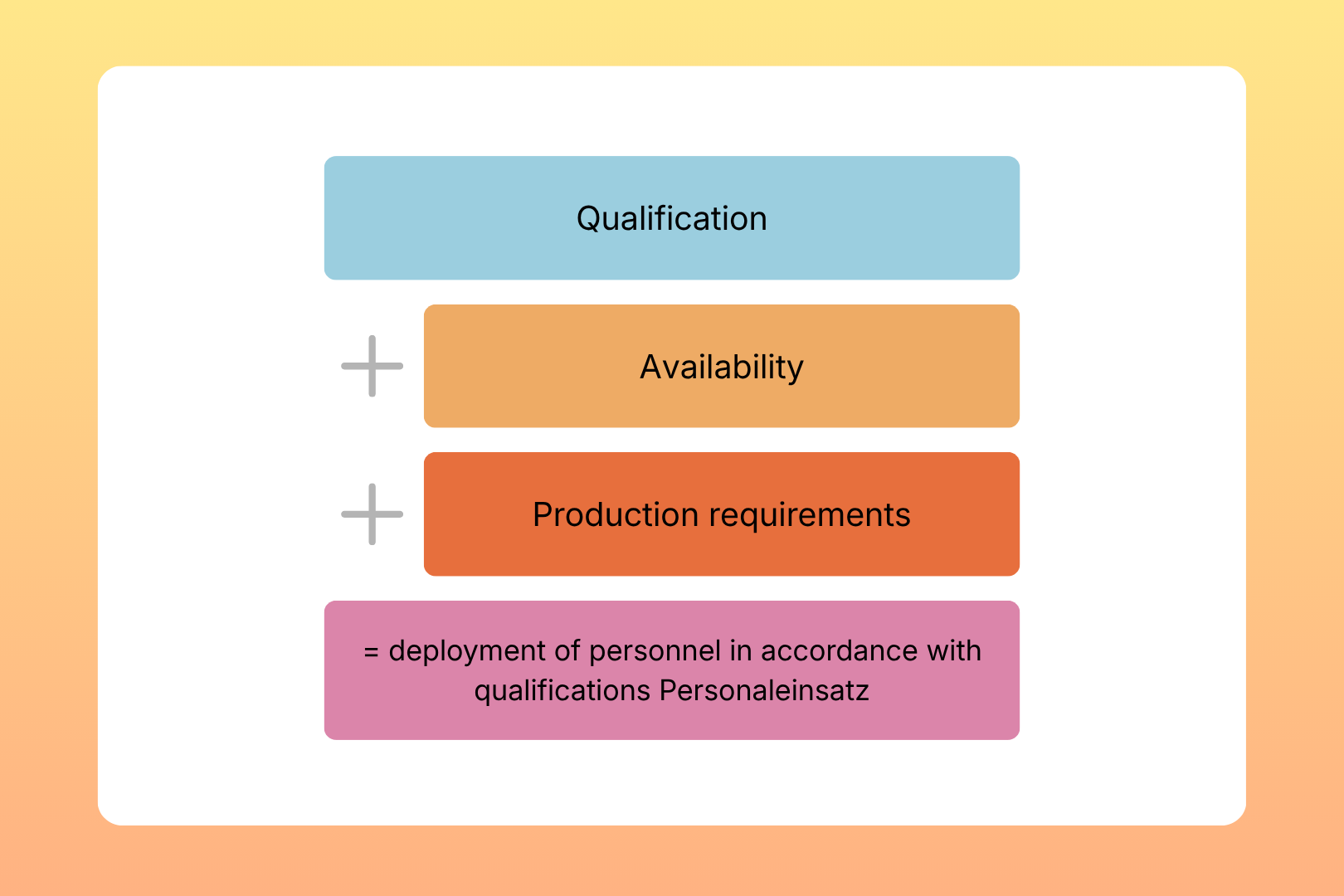
How Skill-based Workforce Assignment Works
More Than a Digital Skills Matrix
The key differentiator lies in its integration with operational planning. This transforms qualification management from an administrative data repository into an operational component of production planning.
Benefits for Your Production
- Centralised transparency of employee qualifications
- Reduced manual qualification checks
- Better utilisation of existing skills
- Higher qualification coverage
- Faster response to workforce changes
- Improved foundation for training and qualification decisions

Integration Instead of a Standalone Solution
Skill-based workforce scheduling does not have to start with a specific production planning system.
MCP Workforce Management can take production requirements from existing ERP, APS, or MES environments and connect them with workforce and qualification information.
Relevante Use Cases
– Qualification-based Workforce Assignment
– Workforce Capacity Planning
– Shift Planning for Manufacturing