

























When Actual Production Becomes a Black Box
Particularly in manual production processes, up-to-date information on progress, resource utilisation, and deviations is often lacking.As a result, production managers only become aware of delayed orders or unexpected issues after the fact.
Typical Challenges:
- Lack of real-time transparency
- Production deviations are identified too late
- Feedback is recorded manually
- High coordination effort between planning and the shop floor
- ERP feedback is delayed
- Actual and planned working times are difficult to compare

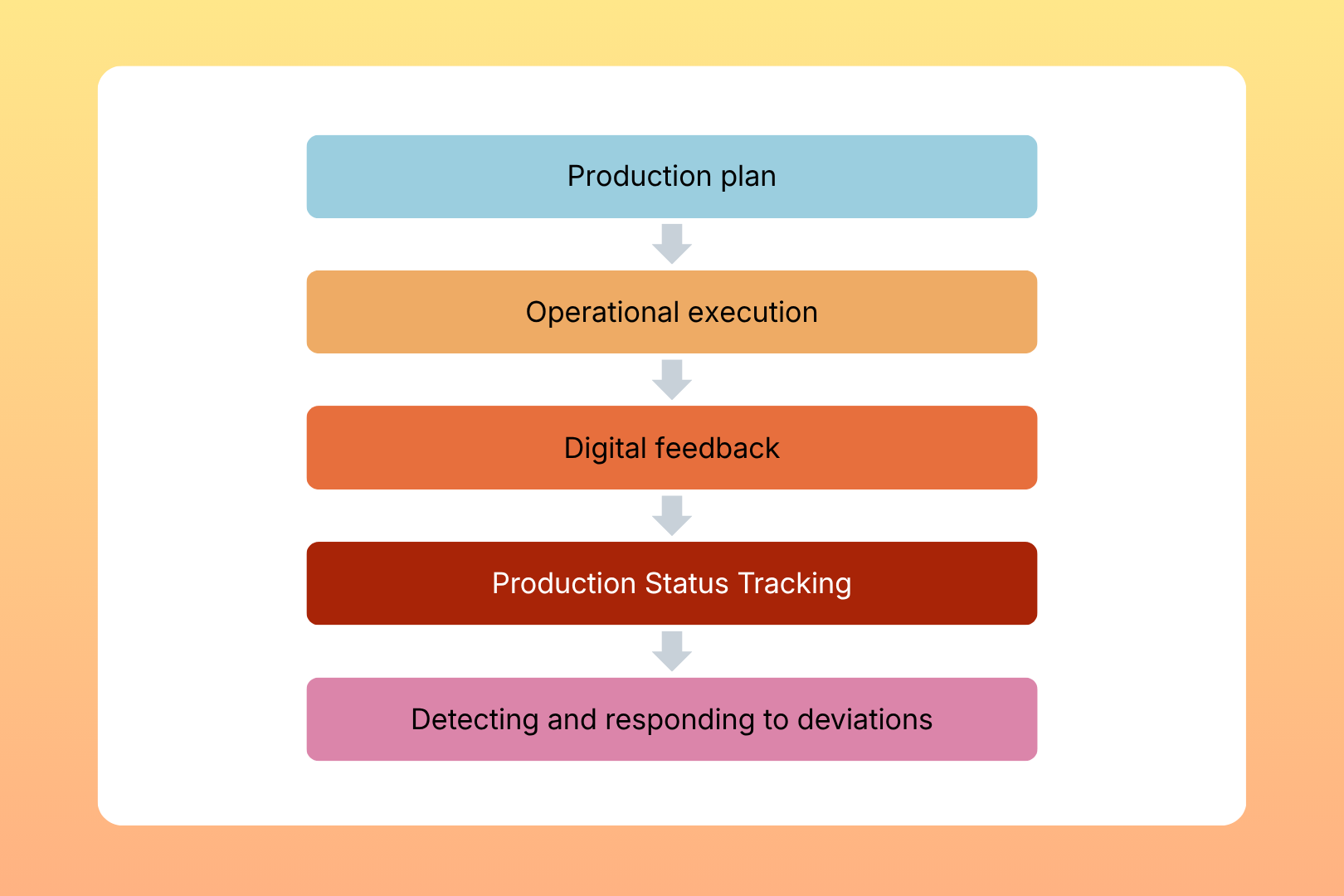
Close the gap between planning and reality.
How Production Status Tracking Works.
The benefits for your production
- Greater shop floor transparency
- Earlier identification of production deviations
- schnellere Reaktion auf Störungen
- Reduced manual coordination effort
- More reliable production feedback
- Improved data foundation for continuous improvement (CI)

Integrates with existing production systems.
MCP Workforce Management can be used as a central solution for production shift planning or integrated with existing ERP, HR, MES, and APS systems.
This allows existing data to continue being used while reducing duplicate data maintenance.
Integrates with Your Existing System Landscape
Together, we analyse your current shift planning processes and demonstrate how workforce availability, qualifications, and production requirements can be systematically brought together through software-supported planning.